The World
On this page
The Nine
Home is a cylinder two kilometres long, turning once every ninety seconds, with forty thousand people in it and nine doors meeting at its waist.
That is more doors in one place than anywhere else in human space, and it is why the Nine matters: eight of the nine are simply Sirius’s nearest neighbours, and one of them is the Garden. Everything worth counting comes through here.
Sirius itself comes through the viewports as a hard blue-white that the filters never quite tame, with a small mean white point beside it that everybody has been told not to look at.
The hall
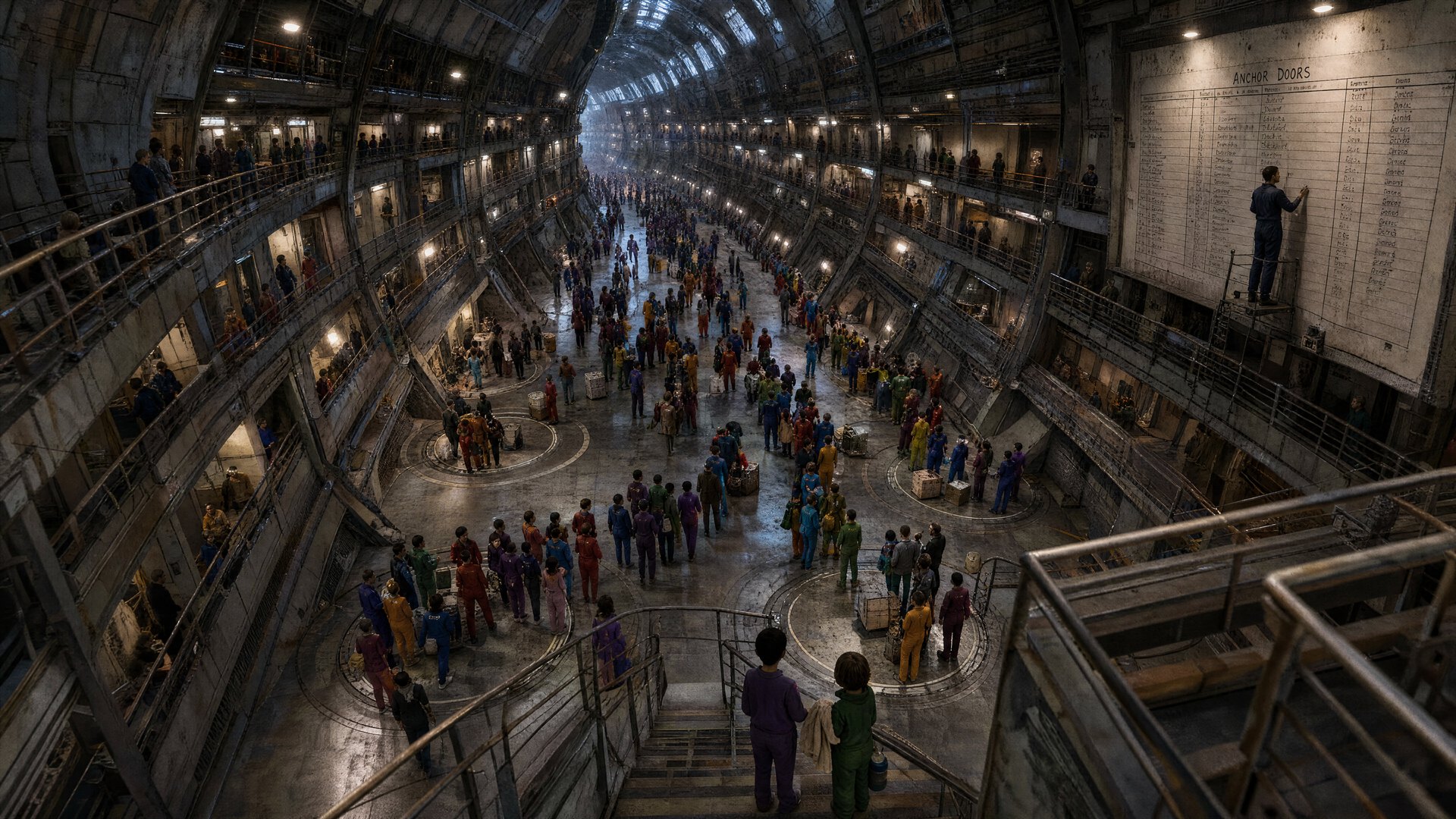
Nine housings in a ring in the floor, nine queues, hot metal, and a tallyman at the head of every line with a board. The decks are named for their doors and each one smells like the place it goes:
- The Procyon Stair is a suburb. Five light years, the shortest hop on the Causeway, prams on the walkway.
- The Coldwater Run is red light and grain dust and the only corner of the Nine that smells of farming.
- The Wolf Gate queue is shift workers, the roughest line in the hall, and — everybody agrees furiously — the best food on the station.
Above it all, on the gallery wall, is the Standing, kept by a child on a stool who will tell you off if you read it wrong.
The architecture is built for five peoples
Once you see it you cannot stop seeing it. Ramps where there should be stairs. A dim corner left deliberately in every concourse. And duct grilles cut to scatter gauge on every single deck — a mesh sized so that a glint can pass and nothing larger can.
There is a line in every budget argument about those grilles, every year, and nobody has ever won it. Somebody six centuries ago designed this station so the smallest people on it could go anywhere, and the people who maintain it have declined to stop.
Being fifteen here
You are paid, in your own name, and nobody’s parent has any say in it.
You have a bunk in a room with eight other people on different shifts, a locker, a tray for your weave, and two boots from two different stars, because everybody ends up with mismatched boots and it is how you read a stranger.
The food is free and institutional and the Wolf Gate run is better than it, and everybody knows it, and the queue for it is the real social life of the station.
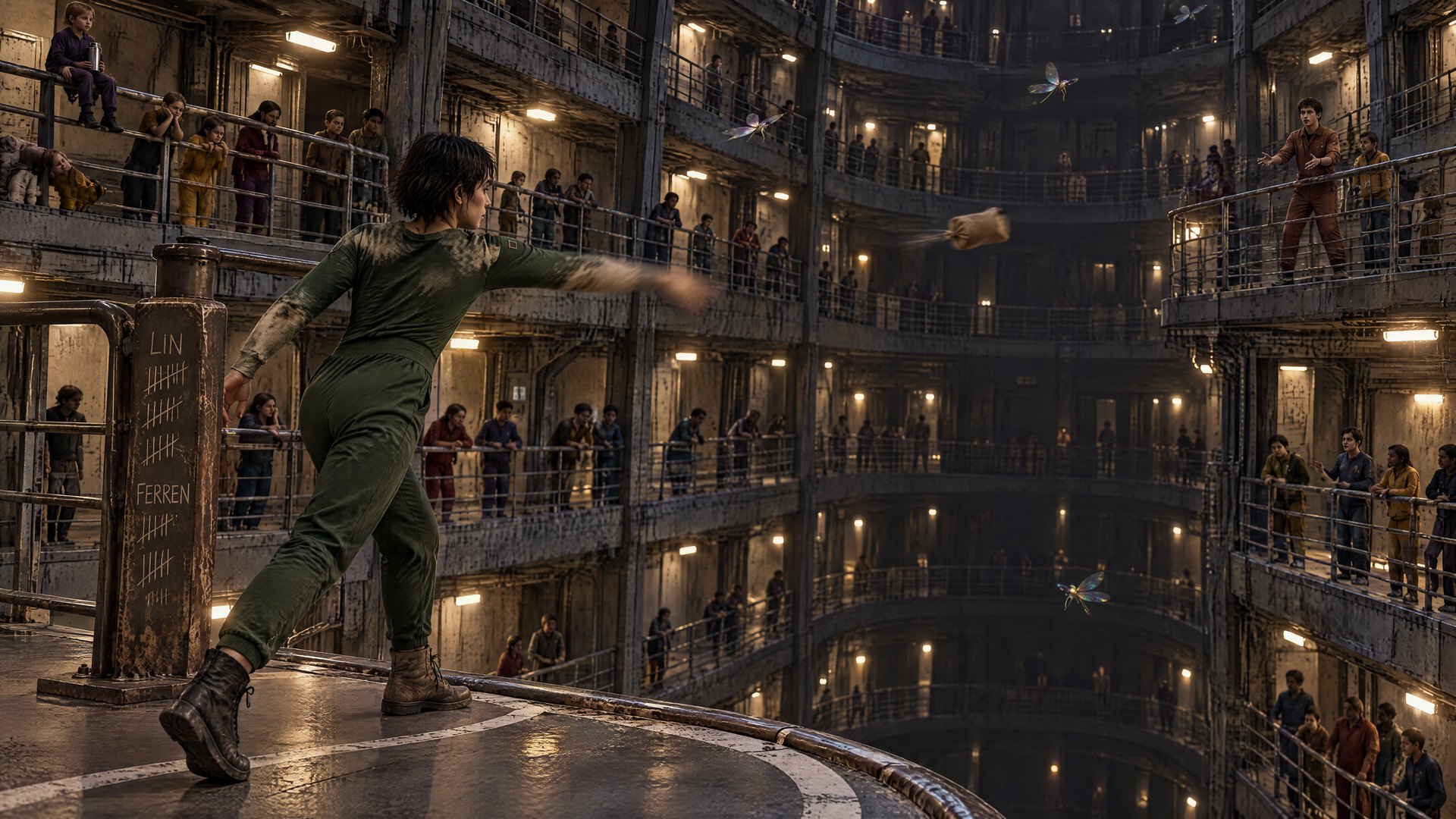
The game is sling — a weighted bag thrown across forty metres of open void in the gallery, caught or not caught by somebody on the far rail. There is a tally scratched into a stanchion in the void going back two hundred years. Nobody tidies it up.
The good view is wherever a shutter is open, and the shutters are closed by default because of the glare, and knowing which handful are not is a kind of local currency.
The people who cannot cross
Every station has hall children — people who were tested and could not do it, which is the ordinary outcome and everybody says so beforehand and nobody quite believes it about their own.
They run the halls. They keep the boards, carry the towels, sit the Standing, know which trunking run the engineer is in, and notice when a line has gone stale eleven days before anybody else does.
Nobody who was taken up ever asks a hall child what happened at their test. That is not a rule anybody wrote down. It is just a thing you learn in your first week, and you should learn it here instead.